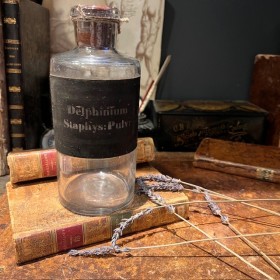

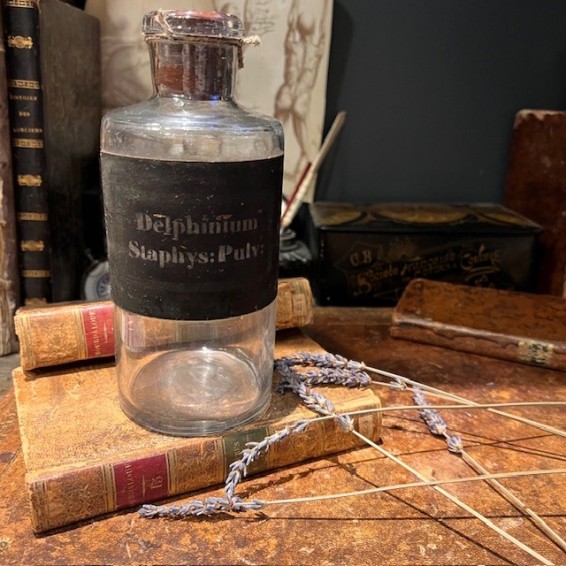
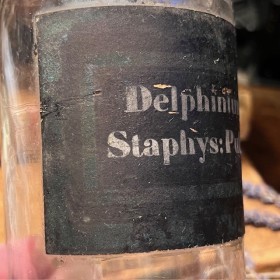
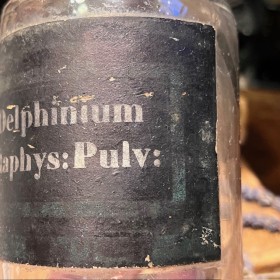
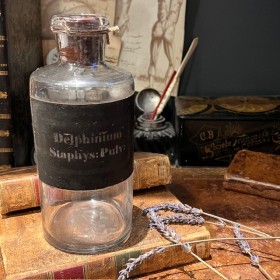
Delphinium staphisagria - Stavesacre
Pharmacy jar - Herbalism - Apothecary bottle
Late 19th century, early 20th century.
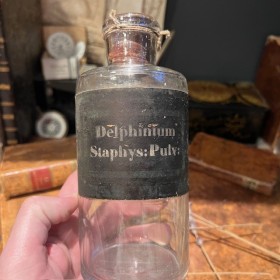
Delphinium staphisagria - Stavesacre
Pharmacy jar - Herbalism - Apothecary bottle
Late 19th century, early 20th century
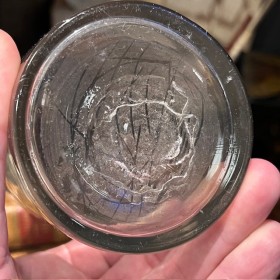
Mouth-blown glass, as the abraded depression of the cane pontil remains under the jar.
Originally black and gold label, now entirely black
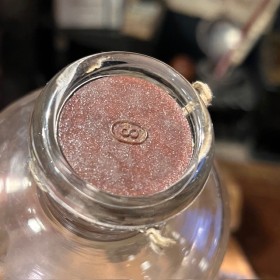
Rubber stopper but no tin stopper.
Diameter 7.5cm. Height: 18cm
SOLD EMPTY
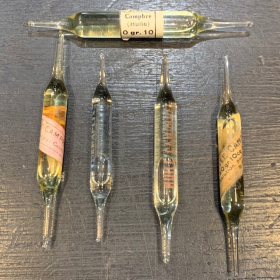
Bulb for hypodermic injection - Camphor (circa 1920)
various manufacturers
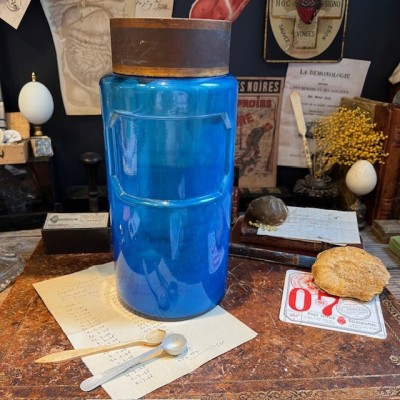
Cobalt blue glass pharmacy jar - Apothecary - Wide neck - H26cm - 19th
Apothecary jar with wide opening. Antique pharmacy bottle
Mouth-blown glass - Cobalt blue color tinted throughout
This large-capacity jar was a storage jar intended for stockpiling
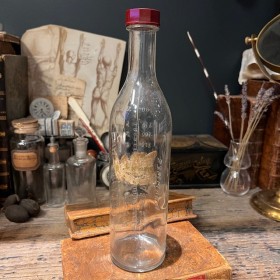
Horseradish syrup
Grams / Tablespoons - Graduated bottle
in French: Grammes / Cuillères à soupe
Antique medicine bottle
Apothecary

Antipyrina Knorr
Named after its German discoverer: Ludwig Knorr
Pharmacy jar - Herbalism - Apothecary bottle
Late 19th century
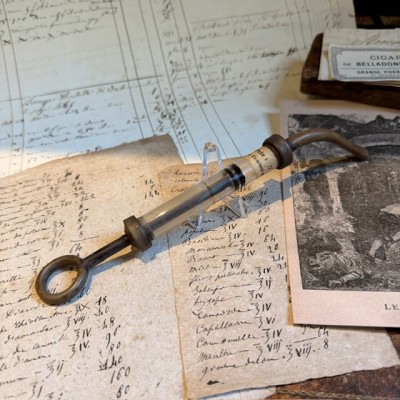
Ebonite and glass laryngeal syringe
For intra-laryngeal injections.
Marketed between May 1939 and sometime in 1940
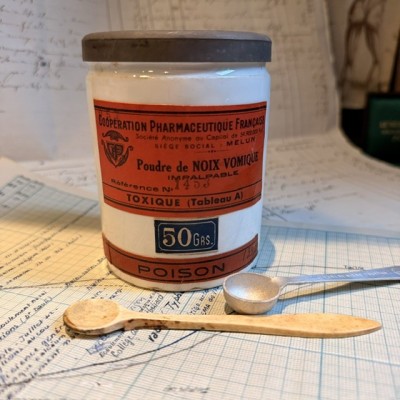
Impalpable Nux Vomica powder
White earthenware pot
Red POISON and TOXIC label
Signaling to the pharmacist that it is imperative to keep apart the other substances in the cabinet of toxic substances, the famous poison cabinet.
It comes from an old cellar-laboratory in a Parisian pharmacy. The bottles had not moved since the late 1950s on the shelves. The cellar had served as a laboratory for medical analyses and a laboratory for magistral preparations of the pharmacy from 1900 until around 1950.
EMPTY

Bibliothèque Choisie de Médecine - Volume 8
Selected Library of Medicine
By François PLANQUE - 1750
Complete original edition with 10 fold-out plates
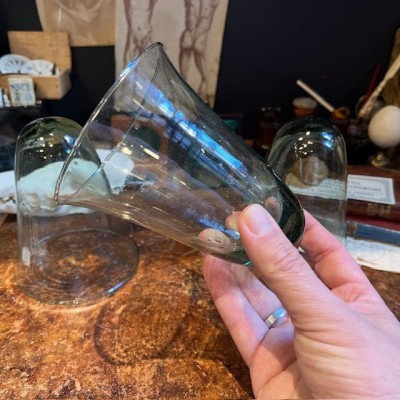
Antique glass bell jar
Apothecary / Laboratory
Thin glass, light green in color and darker at the top, with bubbles
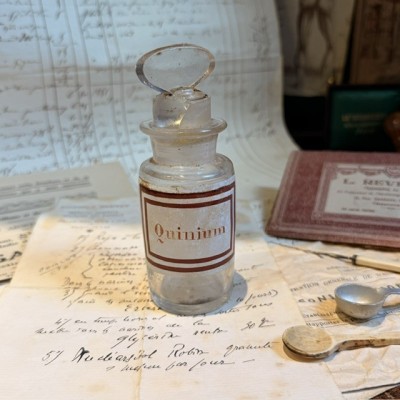
Quinium
Antique pharmacy blown-glass bottle - XIXth century
EMPTY - Blocked cap
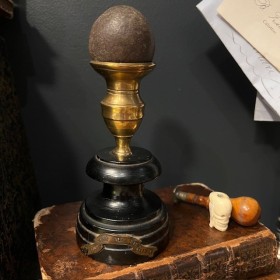
Antique bezoar - Antipoison - Antidote
Once sold by the apothecary, bezoar, also known as gallstone, was reputed to have the same anti-poison properties as the legendary unicorn's horn, hence its excessively high price, also due to its great rarity.
An important piece in a cabinet of curiosities
Sold alone - Without stand, sold separately
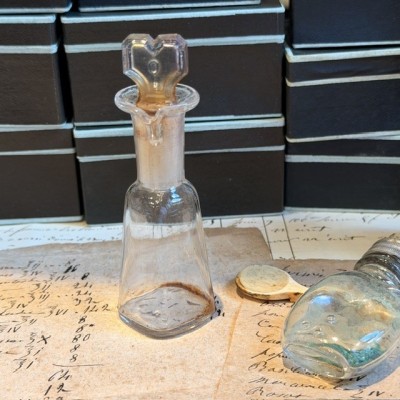
Square Section Dropper Bottle
Antique pharmacy bottle - 1920-30's
Glass stopper honed in the shape of a heart for better grip
EMPTY
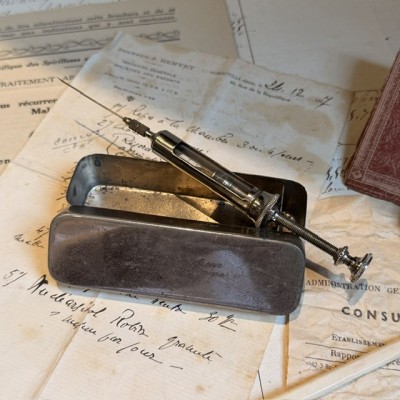
Antique Pravaz hypodermic syringe
Early 20th century
A glass and metal syringe in its metal case, the lid of which is engraved with the inscription: Syringe for hypodermic injections
not functional
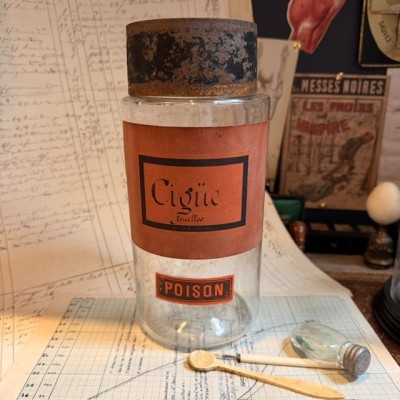
Hemlock leaves - POISON
Antique pharmacy bottle - Wide-mouth apothecary jar.
19th-century mouth-blown glass
Red POISON label
Signaling to the pharmacist that it is imperative to keep apart the other substances in the cabinet of toxic substances, the famous poison cabinet.
A fascinating testimony to pharmacology
It comes from an old cellar-laboratory in a Parisian pharmacy. The bottles had not moved since the late 1950s on the shelves. The cellar had served as a laboratory for medical analyses and a laboratory for magistral preparations of the pharmacy from 1900 until around 1950.
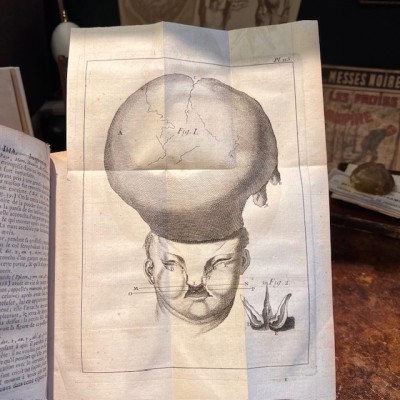
Bibliothèque Choisie de Médecine - Volume 16
Selected Library of Medicine
By François PLANQUE - 1761
Complete original edition with 10 fold-out plates
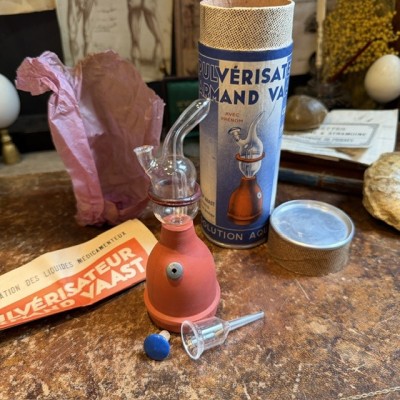
Armand Vaast nasal spray - Oil vaporizer - Antique remedy
In its box
Used in otolaryngology, it was intended for nasal or oral sprays in the treatment of colds and antiseptic treatment of the respiratory tract.

Solution N°153
Antique pharmacy bottle
Apothecary vial
Delphinium staphisagria - Stavesacre
Pharmacy jar - Herbalism - Apothecary bottle
Late 19th century, early 20th century.