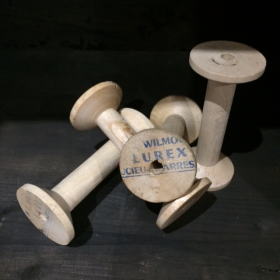

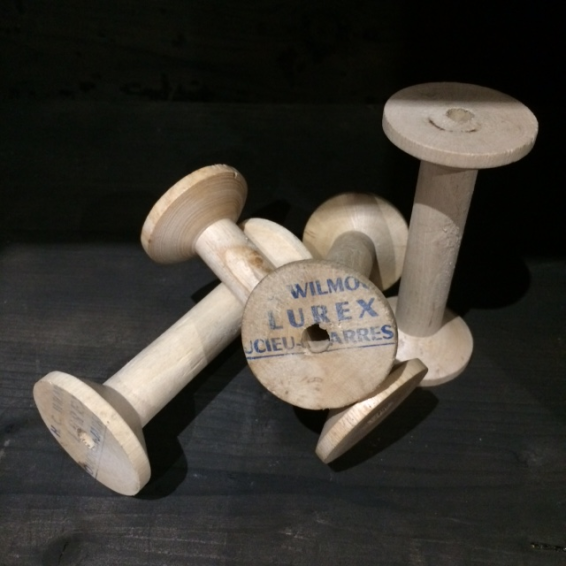
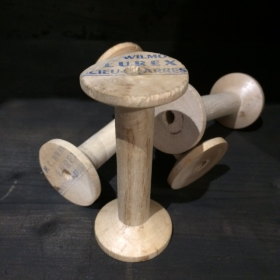
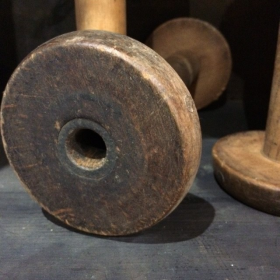
Wooden spool of LUREX
Wooden spool of LUREX
Wooden spool "Lurex" coming from an old textile mill of the 1930s.
8.5 X 3.5cm
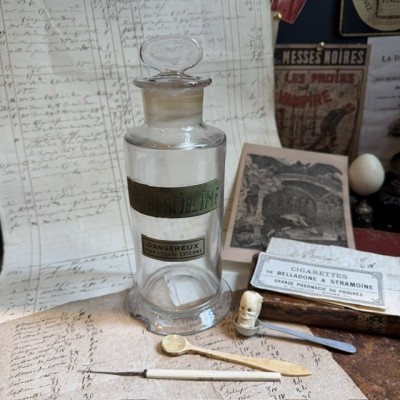
Iode Bi-Sublimé - Bi-Sublimated Iodine
Antique 19th-century blown-glass pharmacy jar
EMPTY
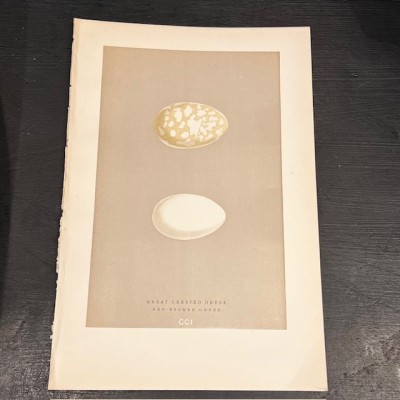
Plate - 19th century colour engraving from Natural History
By Morris, circa 1870 - A History of British Birds
Birds Eggs - In colour
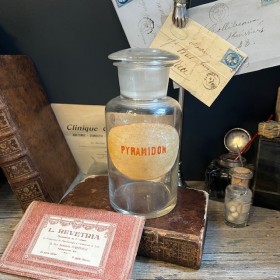
Pyramidon
Antique pharmacy bottle
Apothecary vial
Color pigments have been added to the inside of the jar
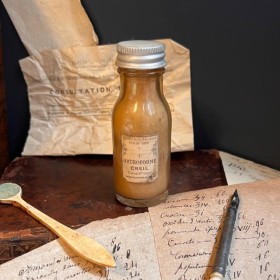
Orthoforme
Antique pharmacy bottle - Droguerie - Apothicaire
Silver medal at Paris 1889
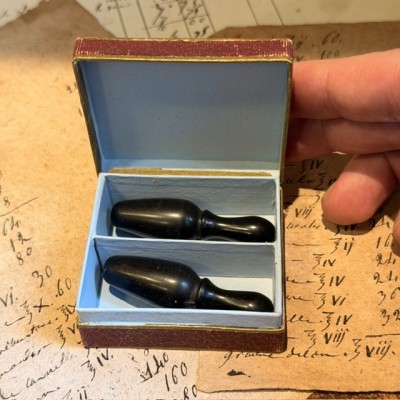
Pair of ebonite medical cannulas in their original cardboard box
Circa 1920–1930
Original stock from that period
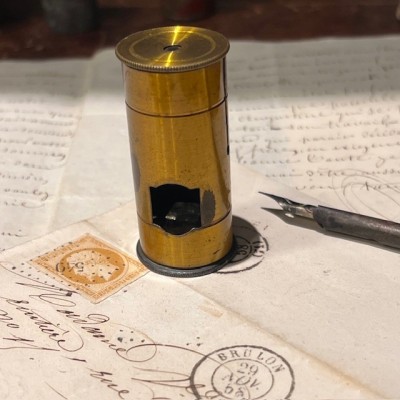
Floroscope
Botanist's microscope
Pocket microscope Late 19th - early 20th century
Warning: Here composed of 2 Stanhope lenses
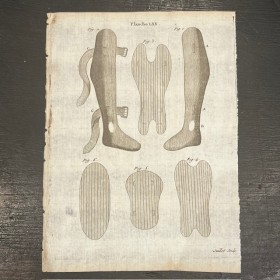
Antique surgical board
From Benjamin Bell's Complete Course in Surgery, published in 1796
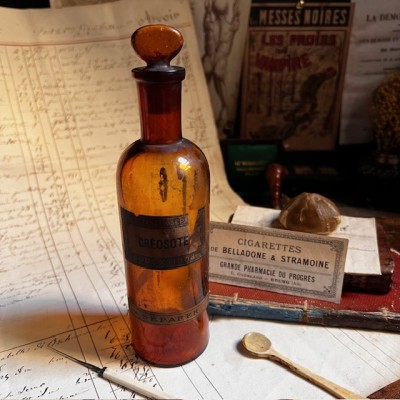
Créosote
Antique pharmacy bottle
Green label: SUBSTANCE TO BE SEPARATED - CODEX 1908
This means that this bottle had to be kept separate from the others because it was dangerous in high doses
EMPTY
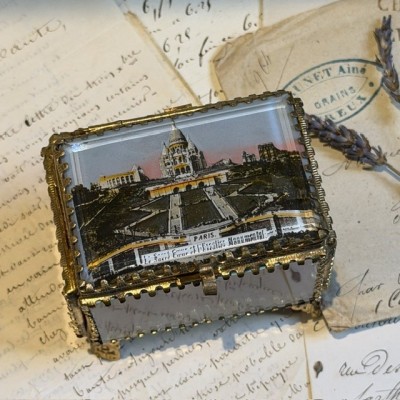
Souvenir of Montmartre 1900 – Sacré-Cœur
Glass and brass reliquary box
Jewellery box
A chance find at a flea market allowed us to bring this jewellery box back from Ardèche (south of France), more than a century later, it returns to where it all began.
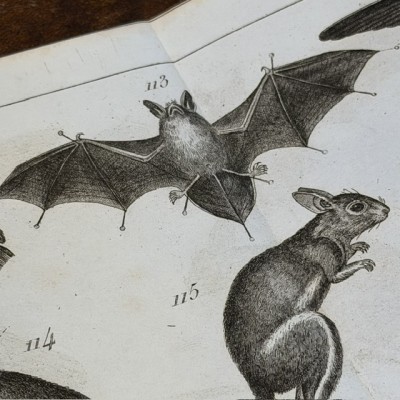
Manual of the Naturalist Preparer followed by a Treaty of Embalmings
by BOITARD - Book of 1853
5 fold-out plates at the end of the volume with beautiful engravings
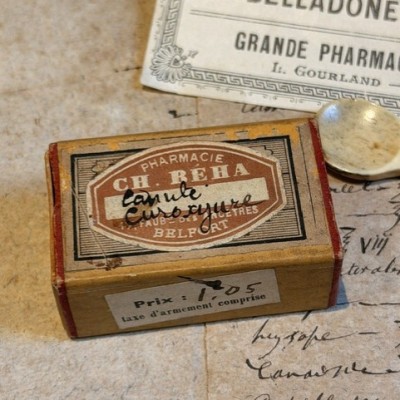
Polished bone cannula - New vintage stock - In its reusable box
Vintage medical device designed to remove pinworms
Marketed between May 1939 and sometime in 1940
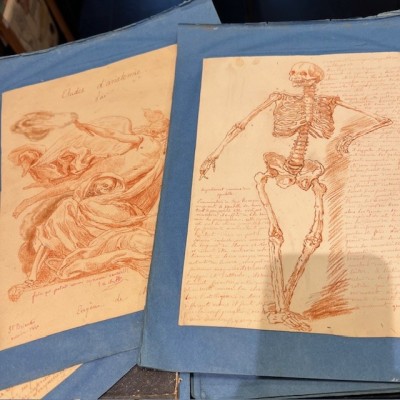
Red chalk drawing- Anatomical drawing
Anatomical study
Drawn by Eugène de Montchoisy in Saint-Brieuc in November 1840
These are not reproductions but original period drawings in red chalk.
You are purchasing one plate, not the entire set of plates
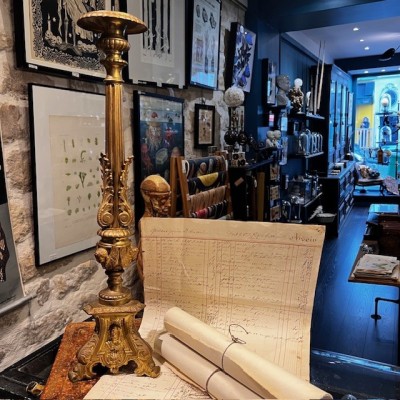
Large Neo-Renaissance chased brass altar candle holder from the 19th century
Candelabra 59cm - Candle holder
Height 59cm Weight: 2.4kg
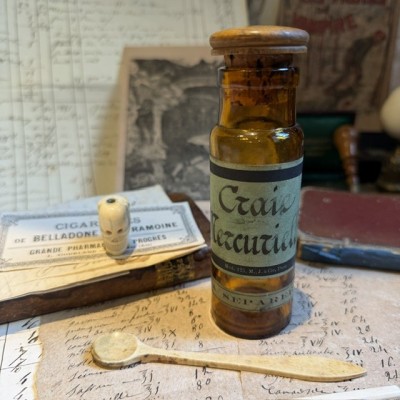
Mercury Chalk – Treatment for Syphilis
Antique amber glass bottle, with a boxwood and cork stopper.
Handwritten label, pen inscription ‘Mercurial Chalk’, neat calligraphy with its thick and thin strokes.
Bottom band ‘TO BE SEPARATED’, instructing the pharmacist to store it in the cabinet for toxic substances, the famous poison cabinet.
It comes from the former cellar-laboratory of a Parisian pharmacy. The bottles had not been moved from the shelves since the late 1950s. The cellar had served as a medical analysis laboratory and a laboratory for the pharmacy’s compounded preparations from 1900 until around 1950.
Period: Judging by the handwriting, late 19th century
EMPTY

Brass plate number per unit
Numbered oval brass plate

Wooden spool of LUREX